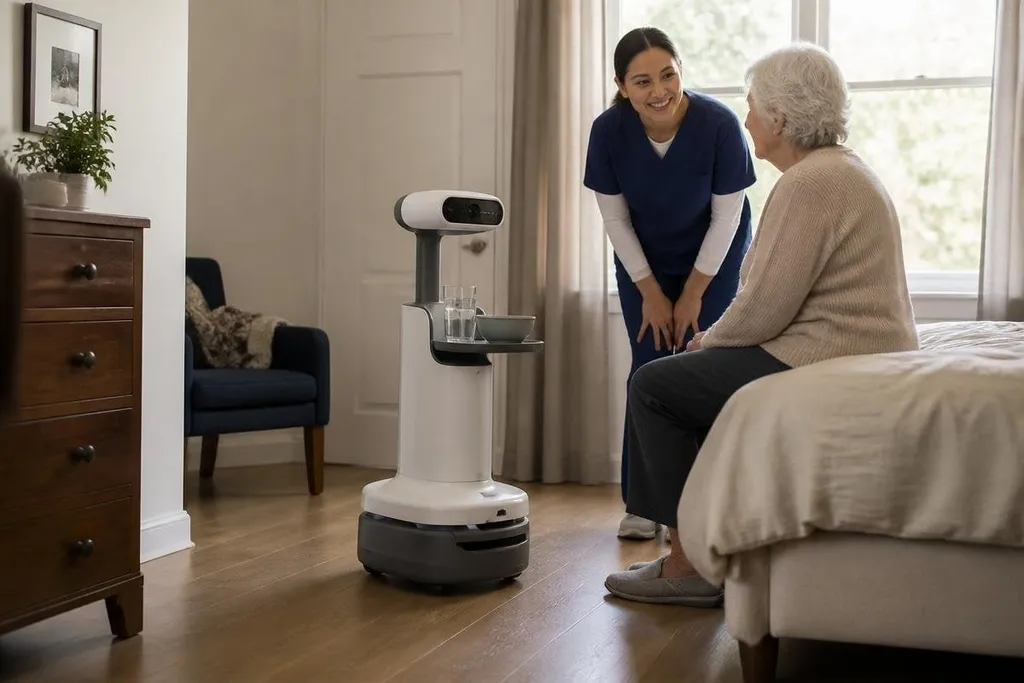
A caregiving robot may carry items, remind someone about medicine, or call a family member after a fall. Those tasks can reduce pressure on carers, but they don't remove the need for human care, judgment, or touch.
- Carrying and lifting can reduce physical strain during daily care.
- Reminders and calls can help someone keep a routine at home.
- Privacy, false alerts, cost, and poor social contact remain open risks.
Where robots can help
The clearest use is physical work. With a mobile base, the robot could bring water, food, clothing, or a phone from one room to another.
A robotic arm might help move an object, but safe handling depends on the robot knowing the object's weight, position, and the person's condition.
That matters for an older person living alone. A small task can become a reason to wait for a carer or ask a family member to visit. Handling low-risk fetching may let the person keep more control over the day.
Care robots can also manage reminders. A screen, speaker, or mobile robot could prompt someone to take medicine, attend an appointment, or start a meal. The prompt only helps when the system knows whether the person heard it and what should happen after they ignore it.
This is where automation needs a clear handoff. If a person misses a reminder, the robot should contact a named carer or family member according to a plan agreed in advance. It shouldn't decide on its own that a missed prompt proves an emergency.
Monitoring brings useful data and new risks
Cameras, microphones, motion sensors, and wearable devices can give a care team more information about daily activity. A system might notice that someone has stopped moving around the home, fallen, or left a safe area.
That information can help people act sooner. It can also create false alarms, especially when a pet, visitor, dropped object, or blocked sensor looks like a problem. Each alert needs a clear response, or carers may stop taking the system seriously.
Privacy needs the same care as safety. A camera in a bedroom records more than a fall, and a microphone may pick up conversations that have nothing to do with care. The person receiving care should know what the robot records, where the data goes, and who can see it.
A care robot can record private talk and still miss when a person wants company rather than a task. Reports from care robotics reporting at Robot24.com can tie those claims to a named robot and test date before you judge its social role.
Social contact is harder to automate
The system can play a recorded message, connect a video call, or guide a person through an exercise. It can also make a room feel less empty during a long day. Those functions may help with routine, but a scheduled call is not the same as a visit from someone who knows the person.
The design also affects dignity. A robot that speaks too loudly, repeats a prompt, or moves into a private space without warning can make care feel like control. Good systems need physical limits, clear consent, and a way to pause or stop the robot.
Cost creates another boundary. The price includes the robot, software, repairs, network access, installation, and staff time. A low purchase price can hide a poor fit if the home needs changes or a carer must answer frequent alerts.
I'd reject any care robot that promises independence while leaving the person with no clear human contact.
A practical buying check
Before choosing a system, check these points with the person who will use it and the people who will respond to it:
- Name the task: write down the exact job, such as carrying a meal or making a call.
- Set the human response: decide who receives an alert, what they check, and how fast they should reply.
- Test the home: check door widths, floor surfaces, lighting, Wi-Fi coverage, and space around beds or chairs.
- Ask about data: confirm which sensors run, how recordings are stored, and how access can be removed.
- Price the full service: include installation, training, repairs, subscriptions, and replacement parts.
- Plan for failure: keep a manual way to call for help if power, network access, or the robot stops working.
Start with one task that is tiring, repeated, and easy to check. Measure whether the robot reduces that work without adding more calls, alerts, or confusion. If it fails that test, a more complex system will only spread the problem across more rooms.
The next useful step is a small home trial with written consent, a named human contact, and a clear stop date. Caregiving robots earn their place when they reduce a real task while keeping the person informed and connected.